Clear opening, not door size
A door sold as thirty inches gives less clear width once the stop and open leaf are accounted for. Measure the gap the trike actually passes through, with the door held open as it would be on the day.
A door sold as thirty inches gives less clear width once the stop and open leaf are accounted for. Measure the gap the trike actually passes through, with the door held open as it would be on the day.
Manufacturers publish overall width as track, measured outside tire to outside tire. That figure is the one to compare against every opening on the route from curb to storage.
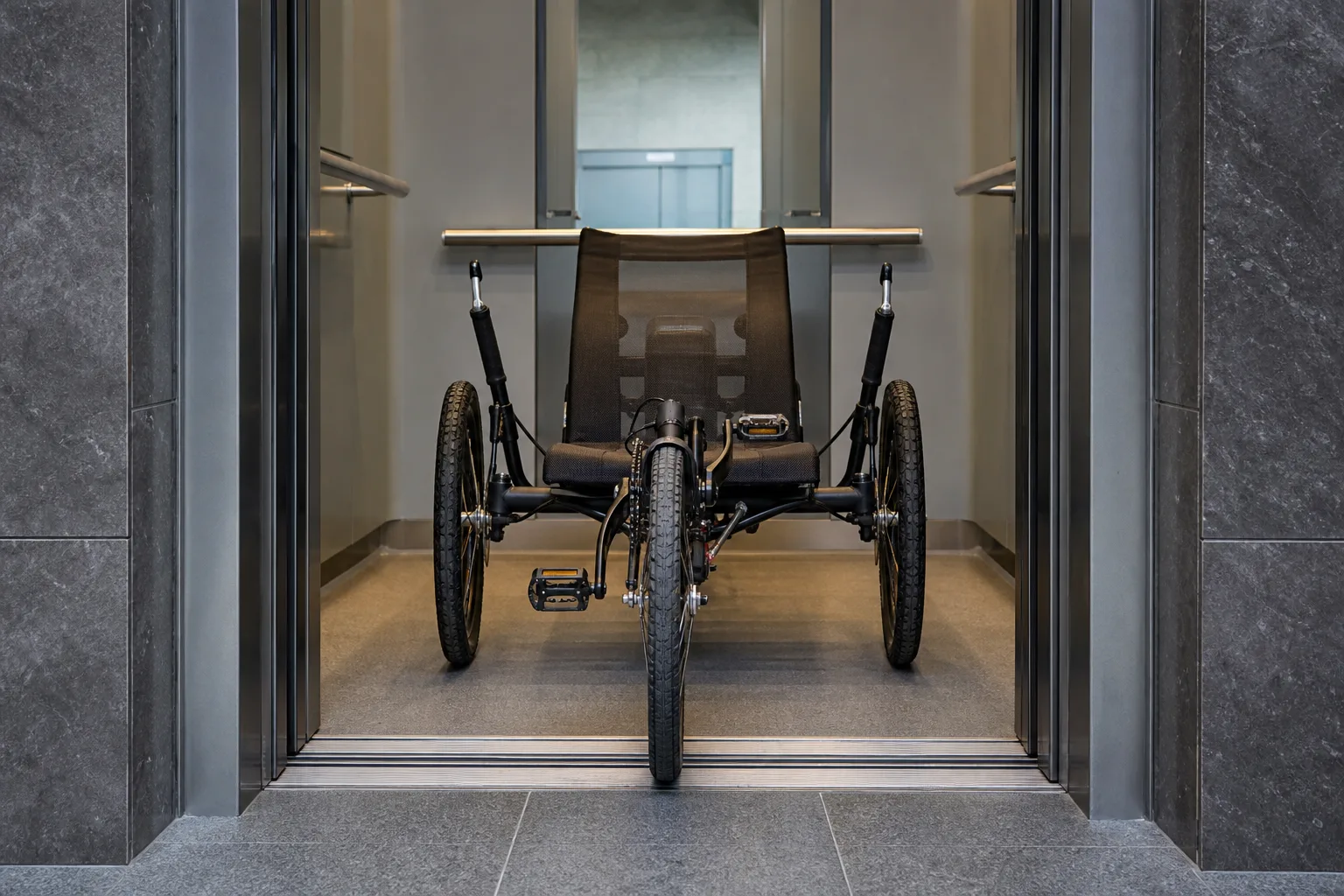
Elevator cabs are usually wider than their door frames, so a trike that would fit inside may not get in. Measure the threshold opening rather than the interior.
Staple and wave racks are spaced for bicycles, so a trike occupies several slots and often cannot be locked by the frame. A separate cable and a wheel anchor tend to be the workaround.
Width, folding, car loading and finding a shop that will true a trike wheel: the physical checks that decide which three-wheeler you can actually keep.
The route matters less than the doorway, at least on the day the trike arrives. A tadpole with a thirty-three inch track will not turn into a narrower machine because the bike path is generous, and a rider who has measured the ride but not the storage ends up leaving an expensive frame outside under a tarp. Nearly every regret reported at the second or third month traces back to a dimension someone assumed rather than checked. Five measurements and one phone call settle most of it, and all of them can be done before any money moves.
Overall width is published, usually as track measured at the outside of the tires, and it is the number that decides everything indoors. Standard interior doors run around thirty inches of clear opening, sometimes twenty-eight in older houses, and the hinge and stop steal another inch or so from the useful span. Measure the actual clear width with a tape rather than trusting the nominal door size, then walk the whole path: the side gate, the basement stair, the turn at the bottom of it. The tightest point governs, and it is rarely the front door.
Apartment riders have an extra constraint that catches people out. Elevator cars are wide enough at the wall but the door opening is narrower, often much narrower, and a trike that fits diagonally inside the car still has to get through that frame. Stand a tape across the elevator threshold before you shortlist anything. The same applies to public bike parking: staple racks and wave racks are spaced for two-wheelers, so a trike parked there occupies two or three slots and often cannot be locked to the rack by its frame at all.
A garage sounds like the end of the problem and frequently is not. The clear width matters less than the width remaining once the car doors open, the water heater sits in its corner and the shelving takes eighteen inches off one wall. Measure the aisle you would actually push through, not the slab. Length matters too, because tadpole recumbents run long, and a machine that fits sideways may need a wall cleared to pivot into place. Riders who plan a hook or a wall cradle should confirm the studs before buying the hardware.
Folding models solve real problems and charge for it in rigidity. A hinge in the main beam is a joint that flexes under pedaling load, and the cheaper the clamp, the more you feel it as a soft, delayed response when you push hard from a stop. That said, a well-made fold with a substantial quick-release and a locating pin is close enough to solid that most riders stop noticing within a week. The honest test is a rented afternoon on a hill. Ride the folder up something steep and see whether the frame talks back.
Ask specifically what folds. Some machines fold the frame, some only remove the seat and drop the boom, some fold the rear wheels inward and leave the length untouched. Each produces a different package, and only one of them will match the space you have. Get the folded dimensions in all three axes, then check them against the trunk, the closet or the storage cage you intend to use.
Weight and shape both matter, and shape matters more. A forty-pound trike that will not clear the trunk opening is worse than a heavier one that slides straight into a minivan with the second row folded. Measure the hatch aperture at its narrowest, usually near the latch, and the flat load length behind the front seats. Bring a friend to the shop and try the actual lift. Many riders end up with a hitch platform rack rated for the weight, which removes the question entirely and keeps the cabin clean.
Call two local shops before you buy and ask a plain question: will you service a trike, and can you true a twenty-inch front wheel with a drum or disc hub. Some shops decline on stand clearance alone, since a trike will not hang from a standard repair stand. Others are glad to take the work and simply pull the wheel. The Consumer Product Safety Commission is responsible for bicycle safety standards in the United States, and shops that follow them are used to the paperwork. Knowing which counter to walk into makes the whole ownership easier.
Take the tape measure to the shop visit and to the apartment lobby. The numbers on the spec sheet are accurate; the assumptions about your own building usually are not, and half an hour with a tape settles both.